Five Things You Need To Know About Asphalt Crackfilling
Asphalt crackfilling does more than just cover up pesky fractures that develop on your pavement over time. Crack filling is a critical piece of the larger maintenance puzzle, helping you avoid significant damage and deterioration. Read on to learn five factors about crack repair you should know.
How Do Asphalt Crackfilling Companies Categorize Damage?
Contractors who perform asphalt crackfilling in Greenville typically categorize damage by its nature and severity.
•Working Cracks: Working cracks, also referred to as “Active Cracks,” show significant movement. The cracks can widen or deepen due to temperature changes or traffic. Basic asphalt crack repair methods are more rigid, so contractors use more flexible compounds. Hot rubber crack repair compounds seal the void to keep water out while still allowing the pavement to move as necessary.
•Non-Working Cracks: Non-working, or “Inactive” cracks don’t exhibit much movement at all. They’re relatively shallow and stable. Thus, they don’t require flexible hot rubber crack repair. Instead, the goal is to fill the void to prevent water penetration and spread.
Are There Different Types of Crack Repair Issues?
Outside active and non-active categorization, contractors take a closer look at damage to understand the type of crack they’re dealing with. How the damage occurs can affect which asphalt crack sealing and filling techniques they use. Here’s a quick breakdown of the types of cracks that could affect your pavement.
•Alligator Cracking: Sometimes referred to as “Fatigue Cracking,” this issue is a result of pavement failure under heavy loads. It can also occur due to poor construction and base failure.
•Edge Cracking: Edge cracking happens along the perimeter edges when the asphalt lacks adequate support.
•Slippage Cracks: Slippage cracks often appear curved. They develop when individual layers of asphalt don’t bond well.
•Reflective Cracks: Damage on lower layers of asphalt can reflect upwards, creating reflective cracks on the surface. Typical asphalt crack sealing and basic repair methods won’t fix this damage.
•Block Cracks: These rectangular cracks form when aggregate dries out too much or asphalt is subject to freezing temperatures without adequate protection.
•Longitudinal Cracks: These cracks run parallel to the pavement’s centerline and usually develop from within the asphalt. Generally, asphalt crack sealing and filling can mend them.
Do Some Types of Cracks Warrant More Extensive Repairs Other Than Crack Filling?
While many surface-level cracks can benefit from hot rubber crack repair and filling, not all damage is easy to fix. Issues like fatigue cracking and reflection cracking typically require more extensive patching. Contractors often have to remove damaged material, repair deeper layers, and repave the area.
Contractors specializing in asphalt crackfilling in Greenville will assess the damage closely before determining the best course of action. They’ll let you know if they encounter damage that basic crack repair won’t address, empowering you to take action before the problem worsens.
Does Asphalt Crackfilling Reduce the Cost of Maintenance Over Time?
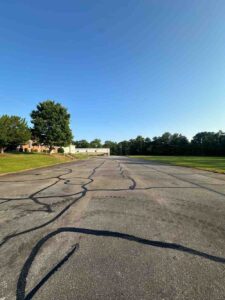
Asphalt crack repair is all about prevention. Vigilant maintenance goes a long way in reducing the risk of brittleness, cracking, and early deterioration. However, most asphalt surfaces will develop fissures and voids at some point. When they do, you must invest in crack filling service to prevent these relatively minor issues from turning into more severe damage.
Every crack is a point of entry for water. Moisture can seep into the foundation, causing potholes, subsidence, and structural problems. Asphalt crackfilling in Greenville prevents that. This service costs up to 30 times less than replacing severely distressed asphalt that you ignored.
How Do Experts Recommend Getting Professional Asphalt Crackfilling Service?
Severe problems require timely asphalt crack repair. However, basic cracking doesn’t need immediate attention. Most contractors recommend annual asphalt crack sealing and filling. Paved surfaces with higher traffic volume, such as parking lots, may benefit from more frequent service.
HLC Asphalt & Sealcoating is Greenville’s most reliable source of crack repair service. We’re an experienced company offering a wide range of services to meet your needs, including asphalt paving, repairs, sealcoating, parking lot striping, signage installation, and more. We take a personalized approach to everything we do, applying our expertise to deliver solutions that work within your budget and meet your needs.
Let us take care of your pavement. Call HLC Asphalt & Sealcoating today at (864) 569-1241 for a free quote. If you prefer, you can also submit our contact form or email hlclinestriping@gmail.com.